
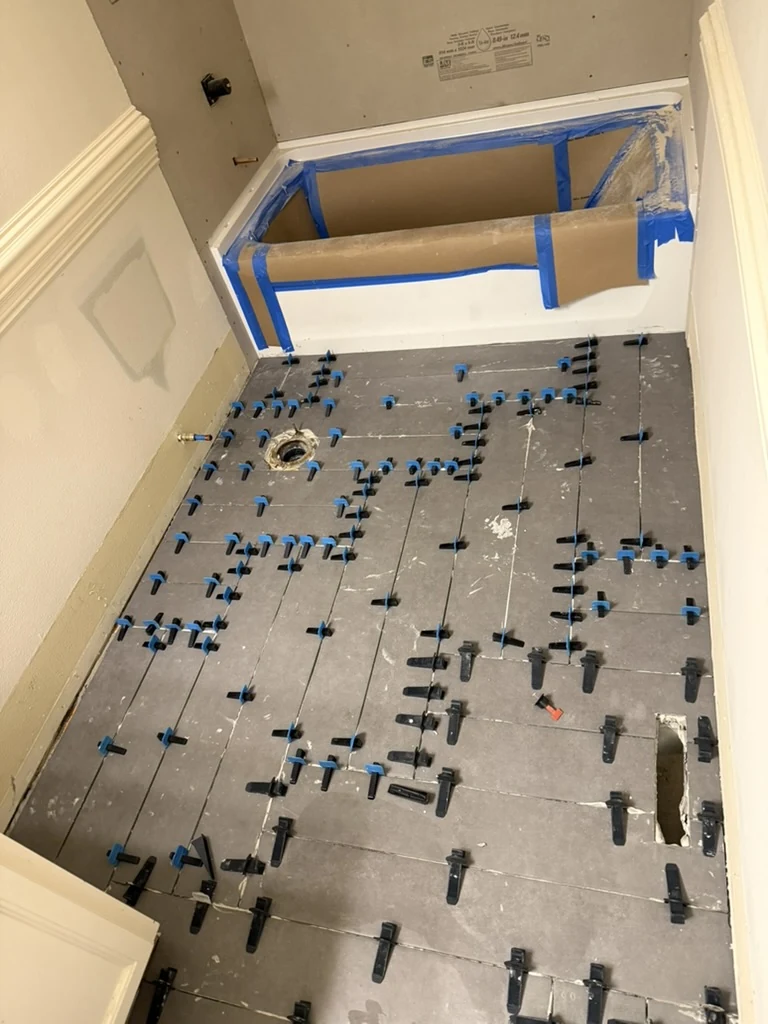
What the work should include
Confirm that the cause has been addressed, then review the affected floor and base. Removal may reveal additional damaged material. The scope should separate floor replacement from moisture-related assessment or remediation, and explain how hidden findings will be documented before new flooring is installed.
Choices to make before work starts
Compare localized replacement with a wider area based on product availability and the existing installation. Matching an aged or discontinued floor can be difficult. Discuss the visible boundary and whether adjoining rooms should remain unchanged rather than promise an exact match from a photograph.
What affects the estimate and schedule
Damage extent, drying readiness and material matching affect timing. Send the affected area, product labels if available and the history of the water event.
Helpful project information
- Exact flooring product and installation information
- Room dimensions, doorways and adjoining floor heights
- Furniture, appliances and existing floor condition
A question about this work
Will replacing damaged planks solve the cause of the damage?
No. The water source and the suitability of the base must be addressed before finishing the floor.