
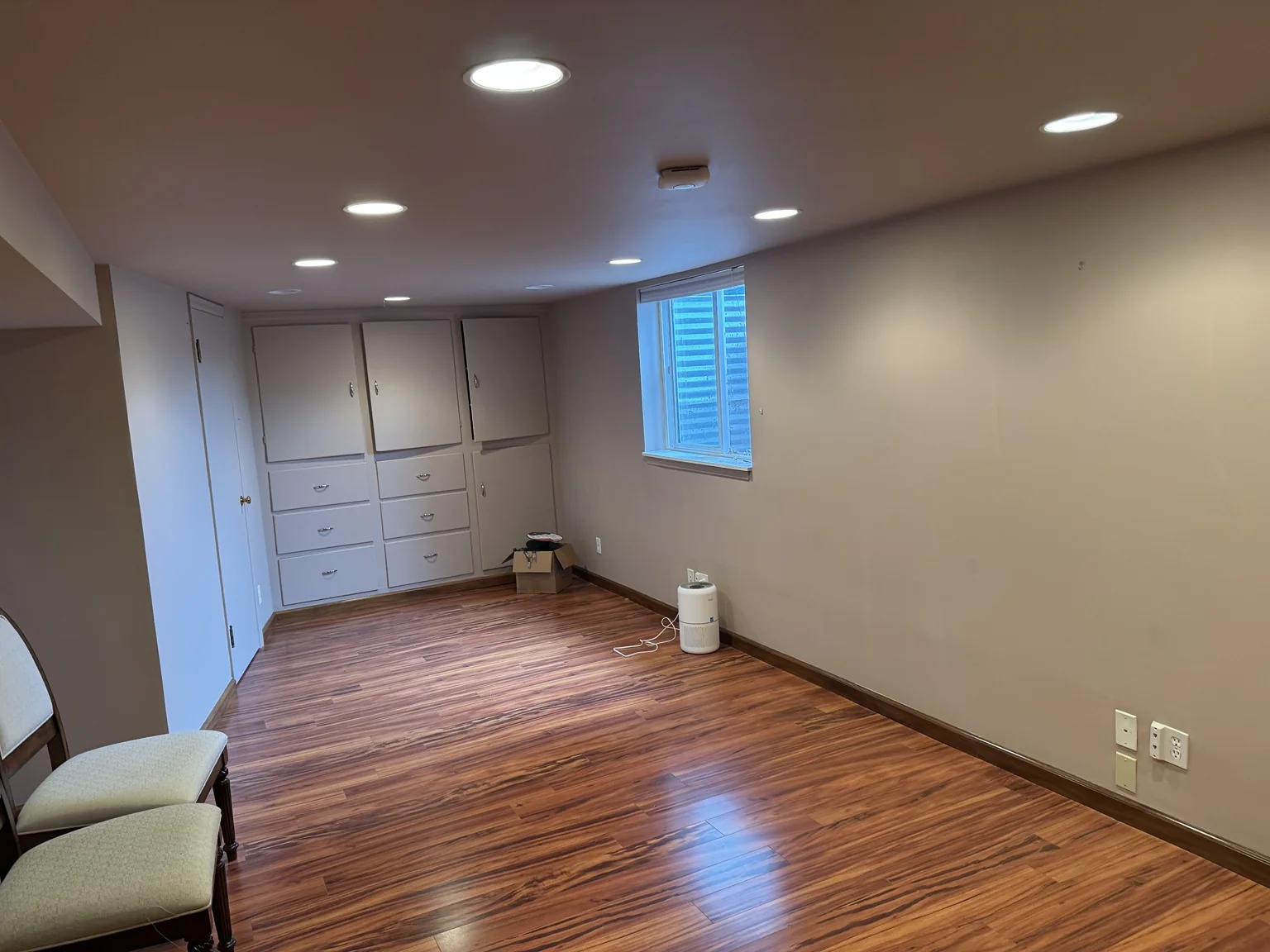
What the work should include
We review trim projection, wall buildup and access to tight edges. The estimate should state whether trim remains, is temporarily removed or is replaced. Additional material on the wall may change how thin trim profiles meet the surface, especially around existing patches.
Choices to make before work starts
Choose a finish sample that includes a real corner or trim edge, not just an open wall area. Decide how much trim repainting is included after the walls are finished. This keeps the wall treatment and the visible perimeter working as one coordinated result.
What affects the estimate and schedule
Detailed edges, protection and trim handling affect labor. Photograph the wall-to-trim connections and tell us which pieces must be preserved.
Helpful project information
- Existing texture in close-up and under side lighting
- Desired smoothness and planned paint sheen
- Trim boundaries and any approved finish sample
A question about this work
Will smoothing the wall always require removing trim?
No. The approach depends on the existing profile and finish target. Include trim handling explicitly when it is needed.
For technical background, see USG finishing and decorating gypsum panels. Your selected materials and project requirements determine the actual installation or finishing instructions.